
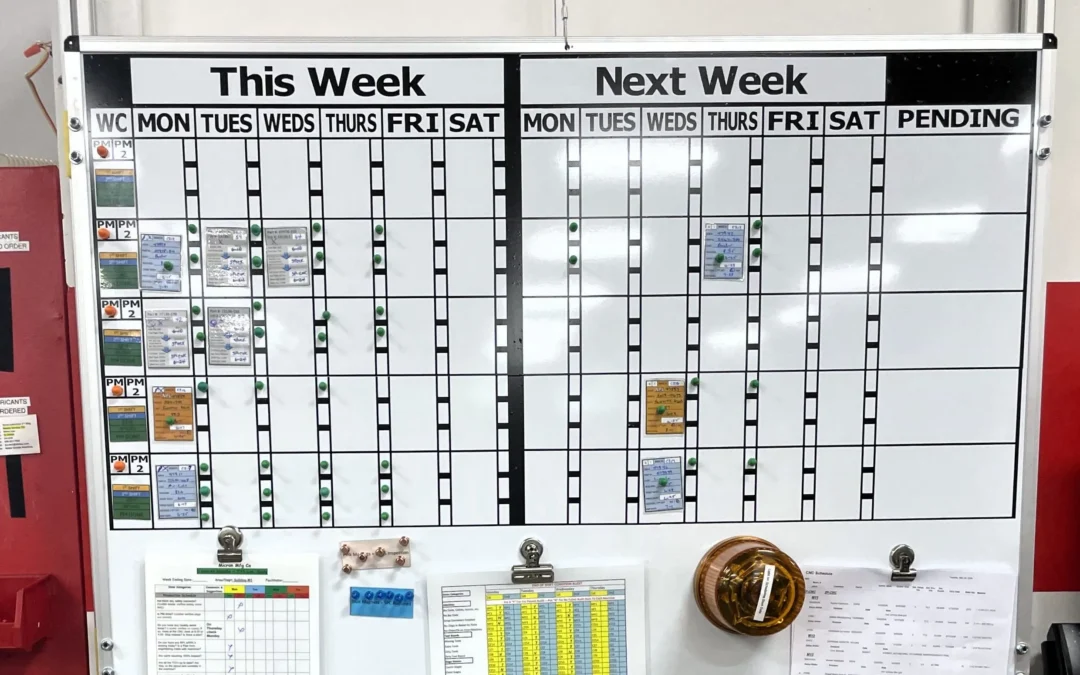
This is the first post in a three-part series on lean visual systems — how they lose effectiveness over time, how to keep them sharp, and how we approach visual management on our own shop floor.
Visual management is one of the core principles of lean manufacturing for good reason. Strong visual systems compress decision-making. They make the enemies of lean — waste, variation, and overburden — easy to see.
But visual systems vary in their effectiveness, and they can weaken over time. Information piles up. Processes change. Time passes. Slowly, a visual control risks fading into the background. Wallpaper.
Once a system becomes wallpaper, operators tend to fall back on memory instead of reading it. That sets the stage for one of the most frustrating failures in manufacturing: the process wasn’t followed, even though the instructions were right there.
At Micron, it is our firm belief that weaknesses in systems should be diagnosed before any blame is distributed to the people working those systems. While a natural response to missed work instructions is to remind the operator to pay better attention, “wallpaper” problems are actually a sign that the visual systems in place must be improved.
Visual Systems that Resist Wallpaper
People stop noticing what they get used to. So the best defense against wallpaper is a lean visual system that stays active, owned, and right-sized.
Start by keeping it current. Processes and information needs shift constantly on a production floor, but visual aids often lag behind. An outdated board might seem to serve “well enough” to leave alone. In reality, an inaccurate display quietly trains people to trust memory over what’s in front of them.
A system also needs to earn attention, and interaction helps. Moving a thumbtack for a PM. Checking a box with a dry-erase marker. Sliding a job card from “not started” to “in process” to “done.” Small physical actions like these build the habit of processing the information, not just glancing.
Ownership matters just as much as design. Every visual control benefits from someone ultimately responsible for keeping it accurate and useful. Wherever possible, also enlist the help of not only the official owner, but everyone who relies on it day to day. The people using a system are often the first to notice when it’s drifted from reality, and their feedback is what keeps it honest.
Finally, there’s a Goldilocks level of detail worth aiming for. Too little information forces people to guess — a real source of variation and error. Too much, and the important parts get lost in the noise. The display itself works best carrying only the most critical information, with supporting detail living in a reference document close at hand rather than competing for space on the board.
Seeing like a First Timer
Even a well-designed visual management system will drift eventually. No board stays accurate forever, and the habits we accumulate with experience provide mental shortcuts that save us from paying attention. The familiarity we develop with our systems over time is what eventually makes us stop seeing them.
Getting an accurate read on a visual system means finding a way to see it again as if for the first time — the way someone brand new to the floor would.
Part 2 covers exactly that: how to audit a lean visual system for signs it’s become wallpaper, and a framework we’ve found useful for refreshing our own.
Recent Comments